
Fact of the day
Alan Hubbard: Vitali Klitschko may hold power in the ring but it is in the bare knuckle fighting of politics where he faces his greatest challenge
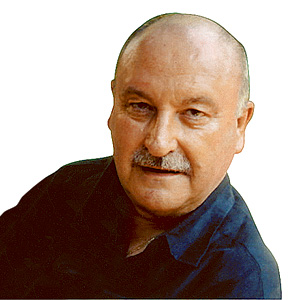
The long list begins in Britain back in 1832 when bare knuckle boxer John Gully, once imprisoned as a debtor, was elected MP for Pontefract. Subsequently came C B Fry, the legendary polymath of the early 20th century who was capped at cricket and football for England, represented Southampton in the FA Cup, played rugby for Oxford and the Barbarians and was a renowned long-jumper and sprinter. He was described as ‘the most variably gifted Englishman of any age’.
Fry was less successful in politics though, twice failing narrowly to gain a parliamentary seat as a Liberal. More recently of course, we have had Colin Moynihan, an Olympic silver medallist rowing cox, Oxford boxing Blue and now British Olympic Association (BOA) chairman, who was both Minister for Energy then Sport, and repeatedly hand-bagged over soccer hooliganism by his leader Margaret Thatcher.

Overseas, sports stars have also made their mark in politics, not least Imran Khan, the former Pakistan cricket captain now vociferously active in Opposition in his homeland, and supporters believe, a putative President.
Remember Antonio Rattin, the bête noir from Buenos Aires who was sent off when captaining Argentina against England in the semi-final of the 1966 World Cup, a scene which caused Sir Alf Ramsey to label the Argies ‘animals’? He subsequently became a member of his country’s parliament. His compatriot, Hugo Porter, the Argentinian rugby legend was also politically inclined. In 1991 he was appointed Argentine Ambassador to South Africa, and in 1994 became Argentina’s Minister for Sport.
Another rugby playing diplomat was the South African Dawie de Villiers, also an MP in his homeland and then ambassador in London during the latter part of the apartheid years. West Indies cricket idol Sir (later Lord) Learie Constantine was also High Commissioner here.

The French have had a succession of ex-sports personalities as Sports Ministers including Guy Drut, Olympic hurdling silver medallist, Jean-François Lamour, double Olympic fencing gold medallist, Chantal Jouanno, 12 times national karate champion and currently David Douillet, Olympic judo gold medallist in 1996 and 2000. In Sri Lanka, cricketer Sanath Jayasuriya represents the Freedom Party in parliament, while in Japan Ryoko Tani, who is likely to be competing at 37 in London 2012, won judo gold in Sydney and Athens and is now a member of the Japanese parliament.
The former Russian ice hockey captain Viacheslav Fetisov was their Sports Minister from 2002 to 2008, while two of Cuba’s most esteemed Olympic champions, that phenomenal athlete Alberto Juantorena and big-hitting heavyweight boxer Teófilo Stevenson (who I dubbed Castro’s right hand man) both later served in parliament.

Every evening Vitali retires to his third floor suite at the five-star spa resort in the Austrian Alps where he is preparing assiduously for his fight with Londoner Dereck Chisora this Saturday, and dials a number in Kyiv, capital of his native Ukraine. The conversation is of strategy and tactics for a pending battle though boxing is not on the agenda.
Instead Klitschko spends an hour or so on a regular conference call with activists in the Ukrainian Democratic Alliance for Reform, the political party he leads in opposition to the Government, against whom the gloves are definitely off.
Last week, in the Tyrolean mountain village of Stanglwirt, I found myself in the company of one of the most extraordinary sportsmen of the age, not only a long-standing world heavyweight boxing champion but a genuine political heavyweight with a PhD, as fluent a four languages as he is with his fists, now battling aggressively for democracy in his homeland where he is vehemently pro-European and anti-Putin, and, like Imran Khan and Pacquiao, tipped his as a future President.

“These days I spend 90 per cent of my time on politics,” he admitted to me. “Sometimes I don’t sleep too well because the brain is burning with what I have to do. The training camp for me is like a vacation. Whenever I come from it my wife tells me ‘Wow, you look so fresh’.
“After training I have this conference call with my party colleagues in Ukraine. In boxing, I am alone in the ring but in politics it is team work. I have some good people around me. Alone I can do nothing. Immediately after the fight, I will be going back to Ukraine to do my work there. Ukraine needs to be a European country, we are European with our history and mentality. Geographically we are in the middle of Europe but we are very far away from Europe with our life standards.
“We need to make many changes. In 1991, I was 20 years old. I voted for the independence of our country. Everyone had a dream to build a new modern Ukraine. Last summer we celebrated 20 years independence. My last fight was in Poland and I saw the big steps that they had taken during their independence, especially for democracy. This is not so in Ukraine. It is a corrupt country. Now I want to stop my homeland sliding into tyranny.
“I believe we can but you just can’t sit in a chair and do it. We have seen Ukraine slide down from democracy. It is still my dream that we can be a modern democratic country and that is what I am fighting for.”
K1, as he is known, who has represented Ukraine at the Council of Europe, first made his first mark in politics in the ring in December 2004, when he wore an orange flag on his shorts in support of the revolution that ousted President Viktor Yanukovych after he was accused of election fraud. Since then he has gained a seat on Kyiv council – which he describes as “run like a banana republic” – and formed UDAR, whose initials aptly form the Russian word for Punch. The party now has some 400 councillors and 10,000 members.
“We have big support and right now we are the fourth biggest party in Ukraine and we have the best dynamic. By the next election we hope to be the second or third.”
Klitschko, who likens Ukrainian politics to bare knuckle fighting, has once run unsuccessfully for Mayor of Kyiv and it looks likely that he will stand again in November’s elections as his popularity escalates.
Meantime, there is a more immediate contest against Chisora at Munich’s Olympiahalle on Saturday, a tenth defence of heavyweight boxing’s most prestigious title, the WBC belt (brother Wlad now holds the four others after relieving David Haye of his toe-hold on the WBA version).

Vitali is 40 now, greying at the temples and clearly more concerned with political in-fighting in Ukraine than bludgeoning opponents in the ring. He also acknowledges that 27-year-old Chisora is younger, hungrier and aggressive. “It will be an interesting fight,” he muses. “He has a big heart and the motivation.”
That may be so, but the polls suggest this should be a landslide victory for ‘Dr Ironfist’ – unless sport’s supreme political champion really has taken his eye off the punchball.
Either way the gloves will be off, and it’s back to the bare knuckle stuff of real politics. Pity John Gully’s not still around.
Alan Hubbard is an award-winning sports columnist for The Independent on Sunday, and a former sports editor of The Observer. He has covered a total of 16 Summer and Winter Olympics, 10 Commonwealth Games, several football World Cups and world title from Atlanta to Zaire.